
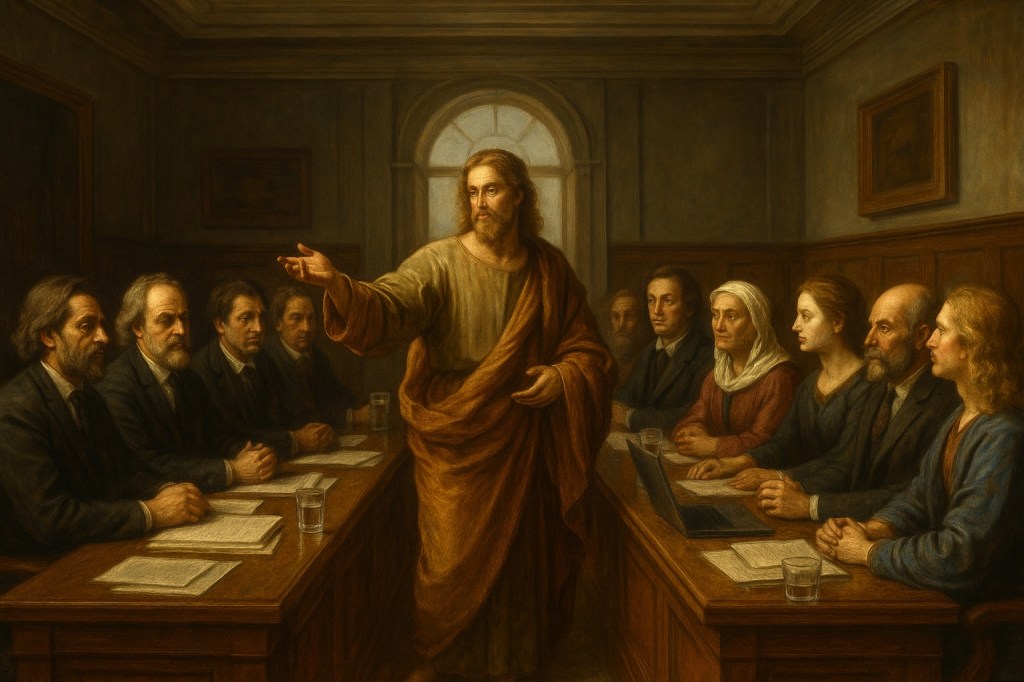
Why every organization needs a resident historian—not just a marketing department
I’ve been thinking a lot about organizational effectiveness lately. I’m working on a primer for innocent bystanders thrust into high-stakes managerial roles, as a prelude to something even more ambitious—one that concerns a titan of industry—and since then, everything around me seems to be speaking in that language.
Last night, I attended the premiere of Tempest, an orchestral work by a composer friend, performed by the Q**** Philharmonic. The piece draws from the rhythmic foundations of Q***** pearl diving percussion and blends them with the seafaring musical traditions of Nordic, Celtic, and Baltic cultures. Beneath the obvious differences lies deep resonance and a shared rhythm shaped by wind, water, and survival at sea.
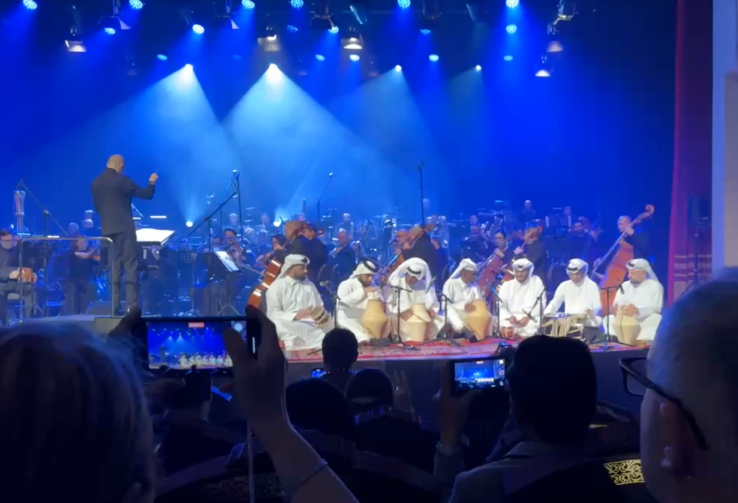
It was a remarkable experience. But I struggled to follow the modes or recognize the sonic codes. I was moved, but, unmoored, I drifted. Knowing the composer, I was certain that the work was layered with meaning that eluded me for lack of a processing framework.
That disorientation allowed my mind to drift to my daily plat du jour—management terrine—shaped by the mold in which it is made. I was reminded of the first time I stepped into an organizational leadership role without any bearings.
Despite your best efforts to discover, intuit, or interrogate a coherent picture of the organization, you struggle to find a critical mass of overlap. You sense there’s a rhythm to how things are done—a set of inherited assumptions, values, and buried conflicts—but no one can quite explain them. You’re handed a PowerPoint deck and a set of KPIs, but no backstory. No context. No through-line.
And without context, even the most brilliant efforts are susceptible to falling flat. It’s like entering a story halfway through—every action is vivid, but the meaning is lost. Worse, such efforts may lead to misalignment. At best, energy is spent—but not compounded.
Once upon a time, context was maintained through epic poems and tales transmitted down the generational line. Earlier civilizations may not have pursued coherence for its own sake, but they understood the power of story to legitimize rule, stabilize succession, and elevate victories into destiny. That’s why empires employed court historians. Their job wasn’t to report—it was to narrate. And while the motive was often glorification, the byproduct was cohesion: a shared encyclopedia, a sense of continuity, a framework through which people could make sense of the present. They helped a polity remember itself—not always truthfully, but usefully.
Today, that role has been quietly outsourced—if not erased. The modern equivalent, if one exists at all, is marketing.
To be sure, marketing has evolved to craft compelling narratives that insinuate themselves into the psyche and make you yearn for goods and services you never imagined needing. It knows how to mythologize products, how to dramatize launches, how to harness the emotional grammar of storytelling to build brands that feel like legends.
But marketing is built for speed. Its job is to chase relevance. It tells the story the market wants to hear—not necessarily the one the organization needs to remember.
And therein lies the irony: we understand the ancient power of narrative when it comes to our offerings. We hire agencies to weave myth into packaging. We pour millions into commercials that echo the Hero’s Journey. Our products have origin myths—but our people have amnesia.
Intra-organizationally, the story breaks down. Knowledge is managed, not narrated. Culture is defined in bullet points. “Lessons learned” are archived in shared drives no one visits. Strategy is deployed without memory. And slowly, coherence erodes.
The result? A kind of institutional drift. A feeling of disconnection. A lack of narrative ballast. And in moments of stress—mergers, pivots, leadership transitions—this absence becomes acute. People can’t see the pattern. They don’t know what came before, or why. They don’t know if this storm is survivable—because no one has told them that the organization has weathered worse.
This is where the historian belongs.
Not as an archivist. Not as a content generator. But as a resident meaning-maker.
The historian listens. Connects. Synthesizes. They draw lines from past to present and surface the stories that help people understand who they are part of, and why it matters. They recover buried episodes that deserve to be part of the institutional identity. They interrogate values—not just by asking what they are, but where they came from, when they held, and when they broke.
They don’t produce slogans. They craft coherence.
This is not a romantic gesture. It is good business. A single hire, a modest role—yet the benefits ripple: more resilient cultures, more grounded strategies, more humane onboarding, and a richer capacity to learn from experience.
It remains a wonder that Fortune 500s don’t all have resident historians. Especially when we know what stories can do. Especially when we invest so much in telling them—except when it comes to ourselves.
Levi’s has Tracey Panek. American Express employs Ira Galtman. A handful of others—Ford, CocaCola, IBM—have long maintained archives and occasionally retained in-house historical expertise. But these examples are exceptions, not the rule. And even they are often misdirected into brand archivists—curators of memorabilia rather than interpreters of meaning.
Slow thinking isn’t indulgence. It is infrastructure. And story—internal story—is the infrastructure of identity.
It’s time to bring back the historian. And give them a seat on the board.

 SEÑOR - The Blog