

How to Know a Person by David Brooks succeeded my own effort written years earlier. That essay made a simple claim: that becoming acquainted with someone is an art. And that art, like so many others, is vanishing.
I cannot say if Brooks took something from me — intellectual property infringement requires a showing that one had access to the original work, which, in this case, lives on a blog mainly visited by bots, the woman that is my love life and the occasional insomnia-ridden friend, is self-evident.
My title: The Art of Becoming Acquainted with Someone
His title: How to Know a Person: The Art of Seeing Others Deeply and Being Deeply Seen
I forgive Mr. Brooks (though I do not absolve him of the owed recompense), as I too have failed to attribute to others their due — though I shall rightly make amends therefor whenever called upon.
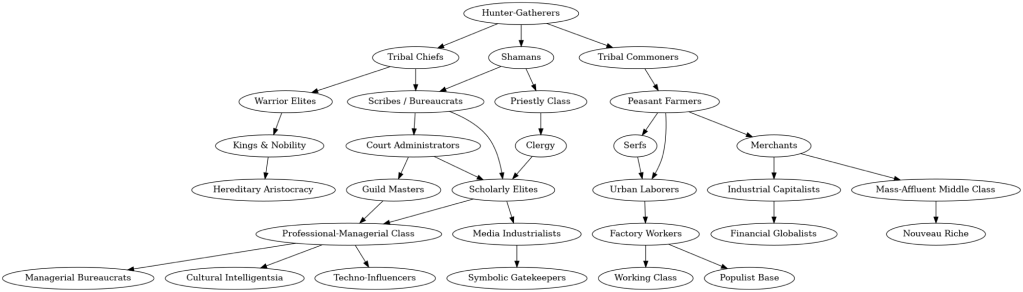
That said, I attributed to Brooks what was his due in my last post, and I shall do the same here. In 2000, Brooks wrote of a new class that had emerged at the turn of the century: the Bourgeois Bohemians, or Bobos. They were, in his telling, the educated elite who managed to synthesize capitalist ambition with countercultural taste — professionals who drank $8 (in those days) pourover coffee while discussing Buddhism in tech boardrooms.
They were the arbiters of reasonableness. The high priests of meritocracy. The class that curated the world’s options — spiritually open, culturally discerning, and economically insulated.
According to Brooks, these Bobos displaced the older WASP establishment — the Protestant elite of inherited wealth, prep schools, and institutional discretion. Where the old guard ruled by pedigree and discretion, the Bobos ruled by résumé and moral signaling. The velvet rope became invisible, coded in taste rather than birthright. The elite were no longer meant to be feared or revered — only admired and, ideally, emulated.
The term Bobos naturally never caught on. You’d be forgiven for having missed the episode altogether, cloaked as it was in a name that fell upon us with a phonetic thud. Bobos bring to mind bozos — too flippant, too unserious to capture the ruling elite of the early 21st century. It smacked of the same ill fate as prepone – too tonally off to endure.
Those who lived it never used it. Those outside it never felt it fit. A class so devoted to subtlety and self-awareness could hardly be expected to adopt a label that made them sound like circus clowns or squat monkeys.

Anything would have been better: the Bougie Brahmins, the Branded Gentry, the Viceroys of Virtue. These curators of consensus and taste bureaucrats, quietly confident in their legitimacy, didn’t seize power; they simply filled the vacuum left when the old establishment fell asleep at the wheel.
And for a time, it seemed (they) would steer (us) forever.
But forever came quickly.
Bobos may have been good at curating taste and policing tone, but they weren’t prepared for what came next: the loss of control over the frame itself. What they had inherited was not just power, but coherence — the ability to define what counted as reasonable, what counted as news, what counted as moral.
Ironically, around the same time Brooks was documenting the quiet replacement of the old WASP establishment by this new class of culturally literate capitalists, the infrastructure that would ultimately unravel their dominance was quietly coming online. The internet — still in its dial-up infancy — would become the solvent that dissolved the gate around the commons.
At first, it seemed harmless. Blogs, photo albums, funny videos. But where AM radio and Fox News had given Middle America a voice, the internet gave it networked agency. Radio could broadcast grievance. The internet could organize it. It turned audiences into actors. Commenters became nodes. Shared discontent became a broadly charted map.
This reframes the now-familiar story of the Rust Belt revolt and the rise of the alt-right. The prevailing narrative suggests that the movement was inevitable — that these communities had simmered too long in neglect, and finally boiled over into a bucket of Trump. But that’s only half the truth.
Yes, they simmered. But without the internet, they wouldn’t have risen. They would have boiled over alone, untelevised and uncoordinated. No matter how hot the anger burned in isolation, it needed connectivity for the fire to spread.
What had been a thousand isolated frustrations became a network. Message boards hardened into movements. YouTube became a pulpit. Podcasts became counter-seminaries. A parallel culture emerged — not from the margins, but from the unmoderated middle.
It wasn’t just a reaction. It was a reformation.
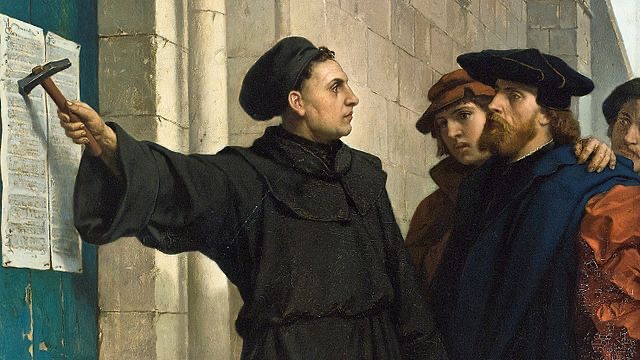
The reformation wasn’t limited to the reactionaries. The Bougie Brahmins fractured too — not with the violence of a bang, but with the slow crackle of thaw.
Their monopoly on legitimacy under attack, they retreated into subtypes. Some sought refuge in tech — accelerationists who believed that innovation would outrun collapse. Others withdrew into institutions — defenders of legacy media, elite academia, curated discourse. Some doubled down on moral intensity, becoming hyper-attuned to language and offense, turning social media into a tribunal of micro-sins. Others simply optimized: productivity bros, urban mindfulness practitioners, wellness rebranders of spiritual longing.
The class once unified by discernment and discretion became fragmented by platform and posture. The universal tone was gone. In its place: warring signals. Different protocols. Competing micro-dogmas. They could no longer agree on what counted as virtue — only that it wasn’t what was on offer by the hitherto disenfranchised or the agents of chaos they had nominated to lead their insurrection.
The Bobo synthesis had depended on a quiet consensus: that merit, taste, and liberal moral progress would pull the world forward. But that consensus required something the internet refused to grant: narrative discipline.
And so the class that once offered the world its menu of reasonable options found itself out-tweeted, out-meme’d, outflanked, and eventually, out of frame.
The Bobo class didn’t fracture in isolation. Their loss of narrative control was part of a broader unraveling — a cascading series of fractures across institutions, ideologies, and mythologies that had once seemed immovable. The cracks may have differed in texture, but the pressure beneath them was consistent: discontent over who controls wealth, who shapes culture, and who decides what’s true.
Examples abound — in politics and religion, in education and identity, in borders and belonging, even in our shared understanding of the planet itself.
Politics: Zionism and the Reversal of Moral Valence
For decades, the liberal West held a stable consensus around Israel as an embattled democracy — a moral outpost in a hostile region. That framing no longer holds. What changed wasn’t the facts, but the access. The rise of digital platforms gave Palestinian voices, footage, and grief a reach once unimaginable. On TikTok and Instagram, raw war now outranks the talking heads. The counter-narrative has become the dominant narrative for much of the global youth. The “most moral army in the world” now stands trial in real time, across millions of screens.
Religion: The Crisis of Islamic Authority
Once shaped by centuries of scholarly consensus and state-backed clerics, Islamic interpretation is now undergoing radical decentralization. Hadith collections — long treated as sacred infrastructure — are being picked apart on Reddit, TikTok, and YouTube. Quranists reject the scaffolding altogether and appeal directly to the text wherein God commands humanity to read independently in the first word of the first aya of the first sura. For the first time in modern history, interpretation is no longer top-down. Faith has gone peer-to-peer.
Education: The Fracture of Meritocracy through DEI
Diversity, Equity, and Inclusion programs once seemed like the natural evolution of liberal fairness — a bureaucratic expression of moral progress. But they’ve become the site of deep fracture. For some, DEI is a necessary corrective. For others, it’s institutionalized grievance and soft authoritarianism. For still others, it’s a hollow corporate performance. Universities, corporations, and governments are pulling back — not in concert, but in confusion. The post-meritocratic consensus has splintered into accusation, exhaustion, and retreat.
Culture: Gender and the Grammar of the Body
Male and female, once stable categories, are now sites of contested meaning. For some, this represents the final triumph of self-determination. For others, it is a metaphysical rupture. Debates once confined to philosophy departments are now litigated on playgrounds, in legislatures, and through viral content. Even those who agree on the need for dignity and inclusion often disagree on the words, the boundaries, or the speed. Gender has become not a noun, but a battlefield.
Borders: Immigration and the Logic of Inheritance
What began as a policy debate has become a civilizational reckoning. One side sees open borders as a form of historical justice — the rightful return of labor and bodies to those who extracted them. Another sees migration as cultural erasure — a slow undoing of fragile coherence. A third, increasingly silent, wants to celebrate multiplicity but can no longer define what it means to belong. The West is absorbing more people than it can culturally integrate, and it’s doing so without a shared myth to hold it together.
Planet: Climate and the Crisis of Coherence
Climate was supposed to unite us. The science was settled, the stakes existential. But now even this domain has splintered. For some, climate change is the new sacred. For others, it’s an elite hoax. In between, a vast population oscillates between dread, fatigue, and strategic hypocrisy. Even those who agree on the facts can’t agree on timelines, trade-offs, or moral prioritization. The consensus didn’t collapse because the science changed. It collapsed because the audience fragmented.
And this is the pattern everywhere: not the death of truth, but the death of authority — and with it, the loss of a shared epistemic ground. It’s not that no one sees weeds; it’s that everyone sees different ones. DEI is either a path to justice or a bureaucratic grievance cult. Immigration is either reparations in motion or cultural suicide. Due process is either a sacred safeguard or a loophole for the deep state’s agents. Climate change is salvation or scam. No matter where you stand, someone is pulling up your principles by the root.
In every past rupture — Rome, the Reformation, the colonial unbindings — the period of fragmentation gave way to convergence. Not balance. Not mutual recognition. But dominance: a new grammar of coherence enforced by church, crown, state, or script.
The Fall of Rome: When the Frame Collapsed
Edward Gibbon famously attributed Rome’s decline to internal softness — prosperity that bred decadence, civic virtue eroded by luxury. But it was also a narrative unraveling. The empire could no longer maintain a story strong enough to bind its vast territories. Soldiers were hired, not raised. Gods were pluralized. Allegiances localized. The center, so long seen as civilizational destiny, became just another place on the map.
When Rome fell, it didn’t fall into nothing. It fell into fractalism: regional strongmen, tribal kingdoms, proto-feudal networks. Life went on. So did power. But it did so without a shared calendar, creed, or canon. The weeds grew wildly until new gardeners — the Church, the Frankish kings, the Holy Roman Empire — began to draw borders again, on both land and mind.
The Reformation: When the Word Broke Free
Then Gutenberg arrived on the scene with his printing press. Suddenly, scripture was everywhere. Not just readable, but disputable. Martin Luther’s challenge to papal authority wasn’t just spiritual — it was infrastructural. He printed. Others printed. The Bible was no longer one voice from one pulpit. It became a battlefield.
The result was a century of chaos: theological wars, counter-reformations, iconoclasm, executions, and forced migrations. Every town had its preacher. Every preacher had his own weeds. And yet, in time, a new order congealed: state churches, national identities, and institutionalized dogma.
The meaning commons fractured — and was eventually redrawn by confessional monopolies. It did not remain open.
The Postcolonial Condition: When the Script Didn’t Fit
Fast forward for another example into the 20th century, when the global south threw off imperial rule. But sovereignty came wrapped in foreign constitutions, imperially drawn borders, and economic templates that didn’t match the realities on the ground. The result was a crisis of inheritance. These nations had independence, but lacked coherent national mythologies. Identity became contested terrain: tribal vs. national, religious vs. secular, imported law vs. ancestral custom.
Some leaders imposed unity — often through military or ideological force. Others watched as their states fractured under pressure from within and without. In both cases, coherence had to be manufactured, and it rarely emerged organically.
And Today?
The echoes are unmistakable. We too are living in a moment of rapid decentralization. Institutions no longer command reverence. Expertise is fungible. Truth is cached, not canonized. Like the Protestants with their pamphlets, we’ve been given the tools to dispute every priesthood. Like the late Romans, we sense the center slipping. And like the postcolonial states, we find ourselves using inherited scripts that no longer describe the world we inhabit.
And if past is prologue, the fragmentation will not resolve itself through pluralistic goodwill. It will be resolved — one way or another — by the emergence of a new authority, a new grammar, a new master story.
It may be techno-authoritarianism, hiding coercion in personalization — algorithms delivering meaning based on predicted compliance.
It may be identity-based tribalism, where cultural and political loyalty calcify into pre-rational belonging.
It may be AI as editor-in-chief, distributing coherence at scale, pruning our informational gardens according to models no one understands but everyone obeys.
Or it may be something older, reawakened — a spiritual grammar refitted to survive digitization and disillusionment.
Unless — and this is the terrifying caveat — this time is different.
Unless we’ve built a system that breaks the pattern. A system that multiplies stories faster than history can distill them. That amplifies every faction, every heresy, every rogue frame — until the very concept of convergence feels naïve.
If that’s true, we are not living through a transition.
We are living in a threshold.
And what lies on the other side is not coherence, but perpetual remix — a civilization without editors, a garden without fences, a world where nothing stays fixed long enough to mean anything at all. A future of chronic flux, where the signal never stabilizes, and the only truth is momentum.
Confusion will take hold.
Then exhaustion.
Then madness.
And finally — annihilation.
But we should be hopeful.

I’m currently watching The Terror on Netflix. I know things ended badly for the crews of Erebus and Terror in their search for a northern passage. Lead Poisoning. Starvation. Cannibalism. But we know this — not because they made it home, but because humanity looked back. Because others lived on to find their wreckage, piece together their story, and name their tragedy.
There is hope in that.
Not that we will avoid the cold, but that someone will be here to light a fire, and remember how we froze.

 SEÑOR - The Blog