They call it a ceasefire. Officially, the agreement is titled “Implementation Steps for President Trump’s Proposal for a Comprehensive End of Gaza War.” Presented by Jared Kushner and Steven Witkoff, emissaries of a second Trump era, it bears all the confidence of a real-estate brochure masquerading as salvation. While the negotiators have been brokering a cessation of hostilities, someone should have been moderating the scripture itself. The secular world has mistaken the apocalypse for an insurgency. But Gaza was not a war. It was a sermon written in fire. The architects of peace may believe they are trying to end a conflict, but the parties in interest are playing out a revelation.
No one expected Yahya Sinwar’s hand to be so reckless. And yet, when he struck, the sparking ember became an inferno leading some in the Axis of Resistance to speculate he was an Israeli agent. In the weeks that followed, friends and enemies whispered the same thing: he had jumped the gun. Some regional patrons, skilled in the art of patient pressure, bristled at the timing even as they readied themselves for the coming rounds.
The storm Sinwar summoned was never destined to remain local. On the northern border, Hezbollah answered the call in force. To the south and west, the Houthis strode into the fray, relentless. Iran stood at the threshold. It had a choreography prepared – a sequence of escalation designed to unfold on its own timetable. Sinwar’s premature strike upset the rhythm, compelling Tehran to revise the script under fire. The stage was never Gaza alone. It was the entire Abrahamic cauldron.
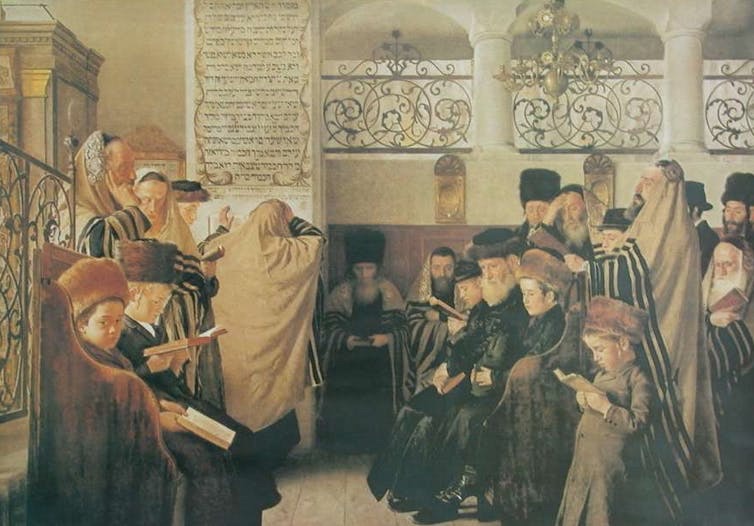
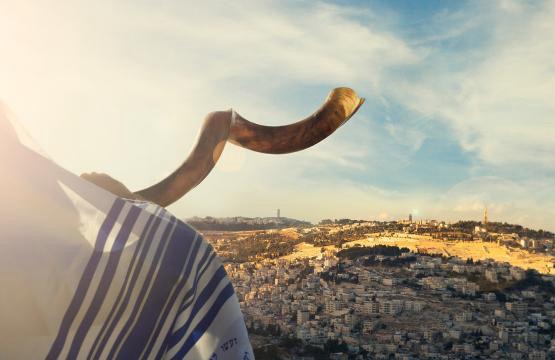
This is the crucial point here: the violence we have been witnessing is not instrumental. It is teleological. For many in Israel’s religious-nationalist movement, the time has come to realize their liturgy’s manifest destiny; for a trans-national evangelical movement, it is a prelude to the Second Coming; for Islamist clerical projects, Al-Quds is the site of the Mahdi’s coming. Each reads their supplement to their patriarch’s tale and sets course for the same stone, the Temple Mount, the Haram al-Sharif. The result: politics fatalised by faith.
Beyond the airborne ash of Gaza, in air-conditioned ministries and evangelical broadcast studios, another conversation continued; the dream of the Third Temple. For certain Zionist currents, heavily supported by American evangelicals, rebuilding the Temple is not metaphorical, it is mission. However to build, one must first destroy. And what stands in the way? The Haram al-Sharif, the Dome of the Rock, the Al-Aqsa Mosque. In their theology, these are not sanctuaries, they are scaffolds for the next revelation. The moment belief meets capability is the moment the fragile status quo collapses.
Diplomats treated Gaza as yet another theater of war. But the bombardment was liturgy; the siege, sacrament. The settlers who set aid trucks ablaze to starve babies were not driven by earthly goals but by the voice of G-d. Every airstrike bore the signature of scripture; every evacuation carried the tonality of a biblical exodus. And while the secular world parsed casualty counts, the believers tallied signs. In Qom, in Nashville, in the settlements overlooking Jerusalem, they wondered whether the time had come.

The tragedy is no longer that the world stood idle despite promising every year – never again. The tragedy is that the world has still not confronted what it is really watching. A cease-fire cannot stop the faithful from implementing their apocalypse.
History, it turns out, has an unnerving sense of déjà vu. The banners are digital now; the swords replaced by drones and doctrines, yet the cry is the same: Deus vult – God wills it. In Washington, the second coming of Donald Trump brought with it a chaplaincy of zeal in cardinals Hegseth, Huckabee and White-Cain. They speak not of policy, but of providence; not of governance, but of kingdom. Their faith is militant optimism in America midwifing the end of days.
This alliance of populism and prophecy mirrors the medieval symbiosis between crown and cross. The Crusades were not purely spiritual. They were instruments of legitimacy. So too now politicians ride religious fervour to consolidate power, believing they command history. But faith, once weaponised, cannot be disarmed. The lesson of every crusade is simple: you can ignite holiness for politics but you cannot extinguish it when it burns through your hands.
The monster they conjured no longer listens. It feeds on prophecy, not policy. Ben-Gvir and Smotrich unleashed it in Israel; the evangelicals bless it in America; the clerics stoke it across the fertile crescent. Each believes they control the narrative. But revelation is not managed. And as one hand reaches for the Kingdom, the other will tremble at the brim of its own ruin.
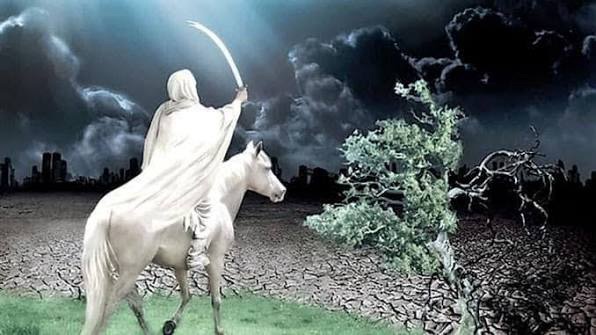
Thus the lines are drawn again: not between Saracens and Christians, but between those who refuse to compromise with history and those who must survive it. The diplomats draft cease-fires; the players enforce scripture. And somewhere beneath the rubble of Gaza, between the ancient stones of Al-Aqsa and the plans for the Third Temple, the ghosts of the first Crusaders stir astonished that their war has not yet ended.
This is not prophecy. It is a warning. When theology invades policy, when pulpits feed legislatures, the chances for tragedy multiply. The only antidote is narrative repair, institutional courage, international honesty. Until then, history will not be written from the vantage of realism, it will continue to stare agape at its authors of faith.

 SEÑOR - The Blog
Teleological, or rather eschatological?
LikeLike
That would follow given the general thrust here. But I was trying to make the point that the violence and destruction was not not an instrument intended to bring about some further end, i.e. to secure peace or release the hostages (Israel has the right to defend itself). It was to obliterate Gaza. The obliteration was the telos. All of this being in service of eschatological ends that I then jump into, I perhaps should revise. But you are heading in one direction and then you change course and then edit combining stuff that should have been separated and then you press publish because, well, aside from you my friend, no one hears me felling these trees.
LikeLike