Purity has long been treated as a virtue. Clean water. Clean bodies. Clean ideas. Clean bloodlines. Pure as the driven snow. It is not merely descriptive language but aspirational language, a claim that something has approached an ideal state. Yet the closer science has come to understanding how living systems actually function, the stranger this ideal appears. Life does not optimize for purity. It never has. And yet the abstraction persists, shaping human behavior long after it has stopped tracking reality. This persistence is a paradigmatic example of the glitch: a representation that remains executable even after its connection to the world has collapsed.
In its earliest form, purity was not a moral concept at all. It was a survival heuristic. In epistemically-constrained environments, visible contamination often correlated with danger: feces in water, rotting matter, carcasses, in a word, the Ganges. Avoiding these reduced risk often enough to be reinforced. Clear water was usually safer than foul-smelling water. Clean wounds healed more reliably than dirty ones. At this stage, purity was not an ideal. It was a proxy. A cheap, visually legible rule of thumb that increased the odds that one’s fears would not come true.
The first transformation came when this heuristic was ritualized. Purity became a way of managing uncertainty rather than danger directly. Blood, death, sex, childbirth, decay. These were liminal states that blurred binary categories and inspired fear. Ritual purification, sacrifice, ablution did not improve nature. They stabilized anxiety. They reassured humans that chaos had been acknowledged and contained. Purity did not need to work causally. It needed to work socially and psychologically.
The decisive shift occurred when purity migrated from practice to essence.
Greek philosophy marks this turn. With Plato, purity leaves the altar and enters thought. The Forms are pure. Matter is degraded participation. Mixture becomes corruption. The closer an idea is to abstraction, the closer it is to truth. Context, contingency, and mess are stripped away in the name of knowledge. Purity, once a proxy for epistemic opacity becomes epistemic itself. To know is to purify.
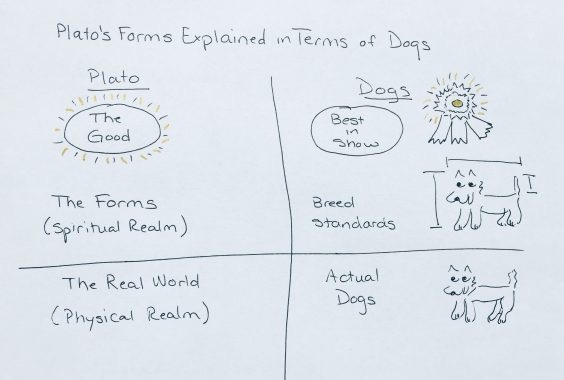
This move is crucial, because it installs purity inside cognition itself. What began as a situational heuristic is now a metaphysical hierarchy. Life, with all its compromise and entanglement, is demoted. The clean, the simple, the invariant are elevated.
Christian theology fuses this metaphysical purity with moral purity. God is pure being. Sin is corruption. Salvation is cleansing. Purity is no longer temporary or contextual. It is existential. Once impurity is reframed as fault, purity inevitably becomes desirable. Not because it produces better outcomes for us, but because it aligns the self with an imagined cosmic order.
The Enlightenment strips away theology but keeps the structure intact. Purity is secularized. Reason must be pure. Science must isolate variables. The subject must be autonomous, untainted by superstition or tradition. Nations must be homogeneous. Languages must be standardized. Cultures must be clarified. What began as a method becomes a worldview.
This is where the glitch fully asserts itself.
Purity in science is a scaffold, not a description of reality. Controlled variables and sterile environments allow learning to happen. But once this methodological purity is mistaken for an ontological truth, the abstraction escapes the lab. Genes must be pure. Systems must be clean. Optimization becomes eradication. Control becomes virtue.
History is full of moments where the purity heuristic fails outright. Crystal-clear mountain streams can liquify bowels. Meanwhile, tannin-stained water from peatlands, brown and “dirty” to the eye, can be anodyne. Fermented drinks, cloudy and alive, were historically safer than clear urban water. Appearance inverted function, yet the aesthetic of purity continued to dominate decision-making.
Modern biology delivers a deeper correction. Humans are not autonomous organisms occasionally assisted by microorganisms. We are composite systems that emerged with these evolutionary precursors. The oral cavity is not gums, teeth, and tongue with bacteria as tolerated guests. It is a microbial ecology whose balance determines kissability, dental health, immune signaling, and disease resistance.
Bad breath is not caused by bacteria as such, but by the collapse of a competitive microbial environment. The purification response, aggressive antiseptics and eradication, often worsens the condition over time. What works is cultivation, not extermination.
Our vision biases us. We notice symbiosis when it is spatially separable and theatrically legible. The bird on the rhino or the remora on the shark are stories we can tell in one frame. The trillions of microbes modulating gut-brain signaling are not. Our cognitive apparatus evolved for hunting and social coordination, not for perceiving biochemical interdependence.
And yet the relationship between us and our microbiota is not quite symbiosis, it is structure. Remove the microbiome and the organism recognizable as human does not regress to a simpler or less optimal state, it fails and disappears. The visible anatomy is scaffolded by life forms we cannot see. Purity does not merely misdescribe this reality. It actively obscures it.
If organisms are cooperative coalitions rather than sovereign units, then evolution is not primarily a competition between individuals but a competition between assemblages. The winners are not the strongest or the purest, but the ones best at hosting, tolerating, and regulating difference.
And yet, we continue to place a premium on genetic purity. Purebred dogs are a cautionary tale. The more “pure” the line, the more riddled it becomes with inherited disease. Hybrid vigor is not a slogan, it is a biological fact.
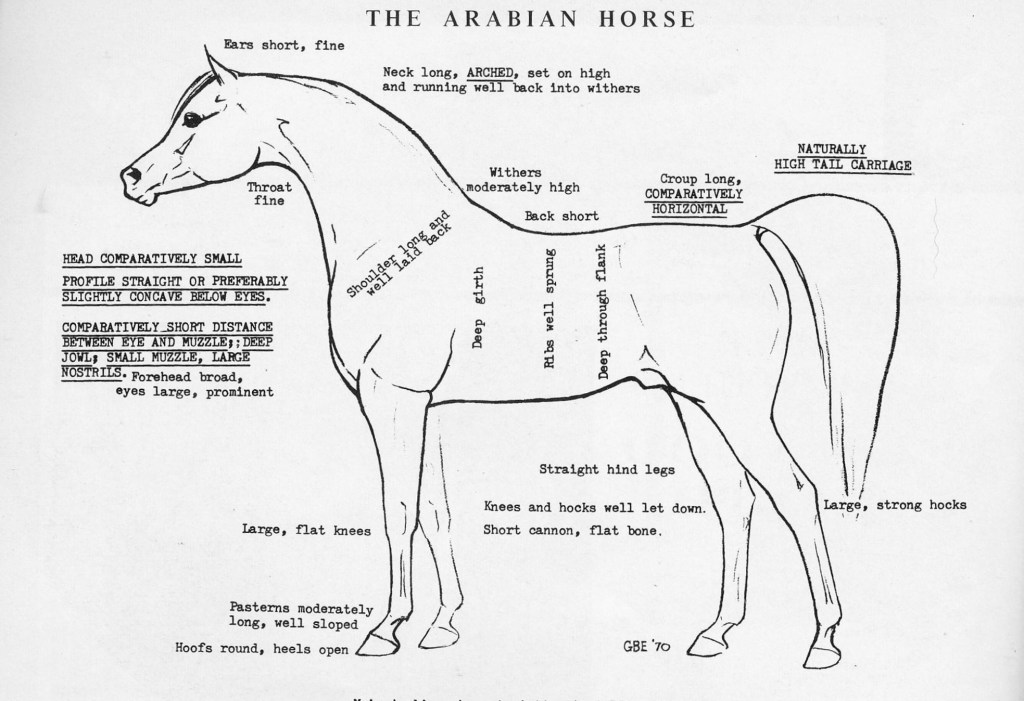
At first glance, horses – Thoroughbreds, Arabians, Lipizzaners – appear to provide a strong counterexample. Lineage tracked obsessively through closed stud books. “Pure blood” as literal terminology. Performance, beauty, predictability all look like purity producing advantage.
But look one layer deeper.
Purebred horses are not selected for biological robustness. They are selected for narrow performance under controlled conditions. Speed over a fixed distance. Gait aesthetics. Temperament for riding schools. Symbolic continuity for courts and states. These are not evolutionary goals. They are human use-cases.
And the cost of purity shows up immediately.
Thoroughbreds suffer from fragile bones, bleeding lungs, metabolic issues, and catastrophic injury rates. Arabians carry heritable disorders like SCID. Many closed-line breeds show reduced fertility, immune weakness, and shortened competitive lifespan. The more rigorously “pure” the lineage, the more veterinary intervention is required to keep the animal functioning.
Sound familiar?
What keeps these animals viable is not purity, but constant artificial support : controlled breeding, intensive care, selective culling, supplements, medication, training regimens. Remove the human-managed environment and the supposedly superior organism collapses quickly.
Let’s consider more challenging counterexamples outside the domain of the living. Diamonds. Optics. Precision materials.
A perfectly pure diamond is a crystalline ideal; is it a useful instrument. Industrial diamonds are doped to change conductivity, toughness, or optical behavior. In quantum sensing, controlled defects are the feature. Absolute purity defines a baseline, not a goal. The moment function matters, impurity is introduced deliberately.
Optical glass behaves the same way. High purity reduces noise, but a single, perfectly pure lens is inferior to a compound system. Aberrations are not eliminated by purity but corrected through curvature, layering, coatings, and hybrid design. Performance emerges from orchestration, not isolation.
Purity here is local, instrumental, and transient. Even where it appears to succeed, it does so as a limiting case, not a destination.
Once we move into matters of taste, purity becomes backstory by virtue of the concept’s heritage.
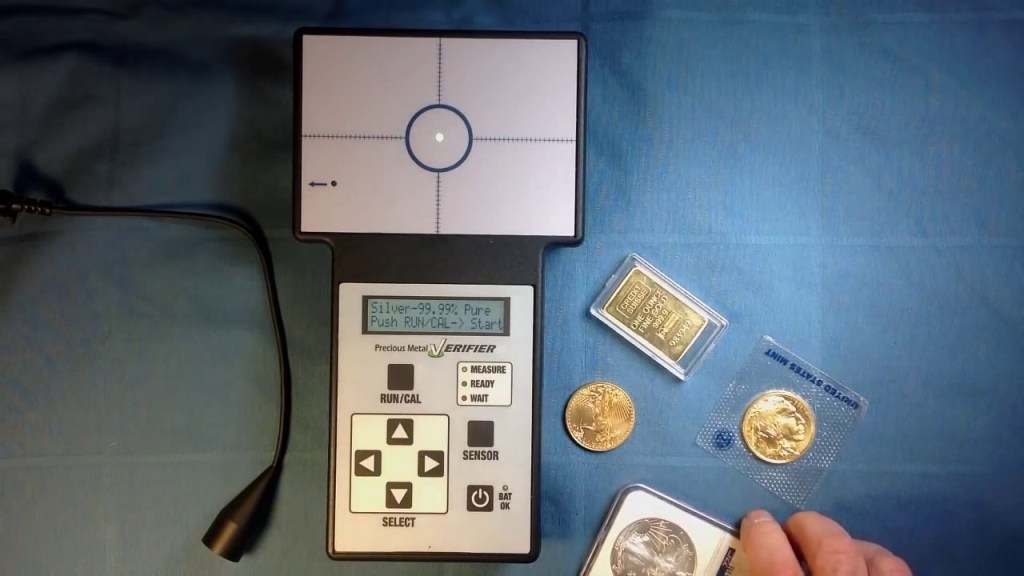
Single-origin malts are not chemically pure. They are stories of provenance, constraint, and exclusion. Purity here signals scarcity and authorship. Pure gold is too soft to use. Pure water is only desirable after the term has been diluted to mean “free from known toxins.” In these domains, purity no longer claims to optimize function. It signals status and legibility.
The pattern is consistent. Wherever life, resilience, or adaptation matter, purity fails. Wherever systems are inert, frozen, or already dead, purity can be aestheticized without consequence.
Evolution optimizes for robustness under noise, not for cleanliness or isolation. Systems that survive are messy, redundant, and promiscuously entangled. Purity only looks attractive when you abstract away the environment and freeze time. Once selection is allowed to operate across generations, purity becomes fragility. A system that relies on a narrow set of conditions collapses the moment those conditions shift.
Which brings us back to the glitch.
Purity persists not because it is true, but because it is executable. It compresses complexity into binaries. It flatters control. It survives failure by redirecting us to an antonym – contamination. When reality pushes back, the model is not revised. It persists; to our collective detriment. Momentum drowns out correction.
Purity was never a property of living systems, nor a condition toward which life tended. It arose as a coordination fiction to manage fear, was abstracted into thought, moralized into identity, and secularized into systems. Science has dismantled it repeatedly, yet the abstraction continues to cast a shadow over how we understand our bodies, our societies, and ourselves.
Purity is not an ideal we failed to reach. It is an aesthetic of death mistaken for a moral goal. And the real danger is not that it is wrong but that it continues to run.

 SEÑOR - The Blog
Your best yet, Mein Lieber Señor.
LikeLike